
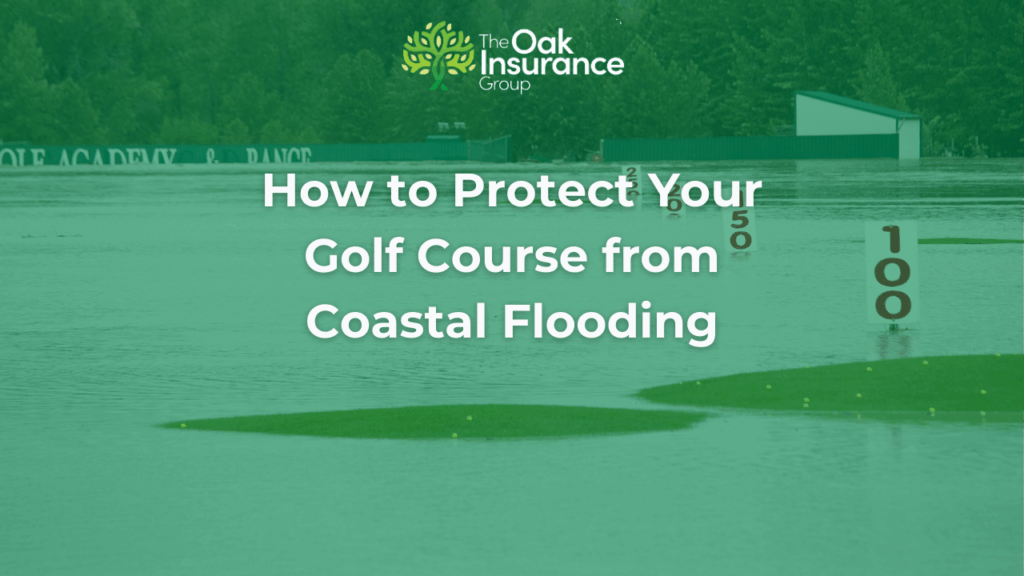
What would happen if your greens were underwater tomorrow?
Would your insurance cover the damage or leave you high and dry?
If you operate a golf course along Georgia’s coastline, you’re not just battling turf disease and tight tournament schedules. You’re facing rising seas, stronger storms, and an insurance blind spot that could cost you hundreds of thousands of dollars.
In this article, you’ll learn:
- The unique flooding risks Georgia’s coastal golf courses face
- How saltwater silently destroys turf, irrigation systems, and infrastructure
- Why standard insurance likely won’t protect you when it matters most
- What parametric insurance is and why it’s a game changer
- The exact steps to take before and after filing a water damage claim
Let’s walk through how to protect your property, your profits, and your peace of mind before the next storm hits.
Georgia’s Coastal Beauty Comes with a Rising Cost
Georgia’s 100-mile coastline is both an asset and a liability. While it offers stunning views and attracts avid golfers, it also places golf courses in the path of worsening flood risks. Rising sea levels, stronger hurricanes, and more frequent king tides are creating a perfect storm of threats.
In Savannah, one recent king tide raised water levels to 10.43 feet, nearly breaking the city’s all-time record set in 1947.
These events aren’t rare anymore. They are frequent, persistent, and increasingly severe. Many coastal courses are located in low-lying areas where saltwater can pool for days, damaging soil, infrastructure, and operations long after the skies have cleared.
Saltwater Intrusion: The Silent Killer of Turfgrass
Saltwater intrusion is slow-moving but devastating. Once salt seeps into your soil or irrigation systems, it can kill turfgrass, damage roots, and create long-term agronomic challenges.
Soil flushing and resodding entire fairways can cost between $100,000 and $500,000. And if your irrigation source becomes contaminated, you may unintentionally spread the damage every time you water the course.
This is not just surface-level damage. Saltwater changes the chemistry of your growing environment and can undermine years of turf management in a single event.
What Flooding Really Damages on a Golf Course
Flood damage on a golf course goes far beyond standing water:
- Erosion and washouts: Water can collapse bunkers, destroy greens, and wash away critical play areas.
- Infrastructure loss: Most Georgia golf courses have between 15 and 25 miles of buried pipes, wiring, and drainage systems that are vulnerable to corrosion or complete failure.
- Environmental contamination: Stored chemicals, fertilizers, and fuels can be released during floods, creating legal liabilities and cleanup costs. Many insurance policies exclude these “pollution events,” leaving owners with the bill.
Why Most Insurance Won’t Cover You
Here’s a common and costly misconception: that your standard commercial property or flood insurance policy covers your entire course. It doesn’t.
A key court case, Ormond Country Club v. James River Insurance Company, clarified that golf courses are considered “land,” which is excluded in most property policies. That means your clubhouse might be covered, but your greens, fairways, and bunkers are not.
The National Flood Insurance Program (NFIP) also excludes coverage for “landscaping,” which includes golf courses. You may think you’re protected, but the parts of your business that generate the most revenue are often uninsured.
Parametric Insurance: A Smarter Alternative
A new form of coverage is offering hope to golf course owners: parametric insurance. This model doesn’t wait for an adjuster or require proof of damage. It pays out when specific, pre-agreed events happen, such as a defined flood level detected by satellite.
The Tees-to-Green program, developed by Floodbase and Amwins, provides fast, flexible capital that can be used for recovery, debris removal, and lost income. Unlike traditional insurance, there are no drawn-out disputes over loss assessments.
Comparison Table
| Coverage Category | Traditional Property | NFIP | Parametric (Tees-to-Green) |
|---|---|---|---|
| Clubhouse and Buildings | Usually Covered | Covered | Not Covered |
| Greens, Fairways, Bunkers | Usually Excluded | Excluded | Covered |
| Business Interruption | Rarely Covered | Not Covered | Covered |
| Speed of Payout | Weeks to Months | Weeks to Months | Days |
| Claim Process | Adjuster Required | Adjuster Required | Automatic Trigger |
How to File a Water Damage Claim the Right Way
If you have any form of flood or property coverage, here are five steps to maximize your recovery:
- Notify your insurer immediately. After a storm, insurers are flooded with claims. Get in line early.
- Document everything. Take photos and videos before and after the event. Keep notes on conversations, clean-up actions, and expenditures.
- Prevent further damage. Board up openings, cover equipment, and stop additional water infiltration. Do not start permanent repairs until the adjuster arrives.
- Submit a complete proof of loss. Include damage documentation, repair estimates, and revenue loss reports.
- Stay persistent. Be ready to push back if claims are delayed or denied. Consider hiring a lawyer who specializes in commercial insurance disputes if needed.
Prepare Before the Storm: Practical Steps for Course Protection
While insurance is crucial, your first defense should be a strong disaster readiness plan. Here’s how to minimize damage before the next storm.
On the Course
- Improve drainage. Clean out basins and spillways regularly. Invest in advanced systems that redirect water efficiently.
- Elevate key areas. If possible, raise greens, tees, and vulnerable infrastructure above known flood lines.
- Lower pond levels. Create room for incoming stormwater by draining irrigation ponds ahead of storms.
In the Maintenance Facility
- Protect equipment and chemicals. Move everything to higher ground. Keep lithium batteries elevated to reduce fire risks.
- Plan for power outages. Secure generators and manual fueling methods. Back up critical files and operating records.
- Stage cleanup tools in advance. Chainsaws, debris removal gear, and tow straps should be ready to go.
Before the Next Storm Rolls In
After years of investment and care, your course deserves more than a gamble on outdated coverage. You now know that traditional insurance often fails to protect your most valuable assets. You’ve also seen how parametric insurance offers faster, smarter protection that aligns with the realities of coastal risk.
With stronger storms on the horizon, now is the time to review your risk strategy and close the coverage gap. Preparation is power.
Get a quote today and protect the greens you’ve worked so hard to build.