Quick answer
Liability for stray golf balls depends on the situation. Under Georgia's assumption of risk doctrine, homeowners who move next to a golf course are generally treated as accepting the risk, and a recorded easement can protect the course. Golfers can still be personally liable, especially for reckless shots. Courses should keep easements, records, and liability insurance in place.
This article explains how Georgia law determines liability when a golf ball damages a window, focusing on the legal doctrines of assumption of risk and easements. It highlights key court rulings like the DeSarno case and offers practical advice for golf course owners on risk management, insurance, and drafting effective easements to minimize legal exposure.
Key Takeaways:
- Homeowners living near golf courses in Georgia assume the risk of stray golf balls, limiting their ability to claim damages under the assumption of risk doctrine.
- A well-drafted, recorded easement legally permits golf balls to enter neighboring properties, providing strong protection against nuisance or trespass lawsuits.
- Golfers can still be held personally liable for damages caused by their shots, especially if reckless behavior is involved, even when an easement protects the golf course.
- Golf course owners should implement risk management strategies, maintain clear easements, and coordinate with insurance providers to reduce potential legal claims.

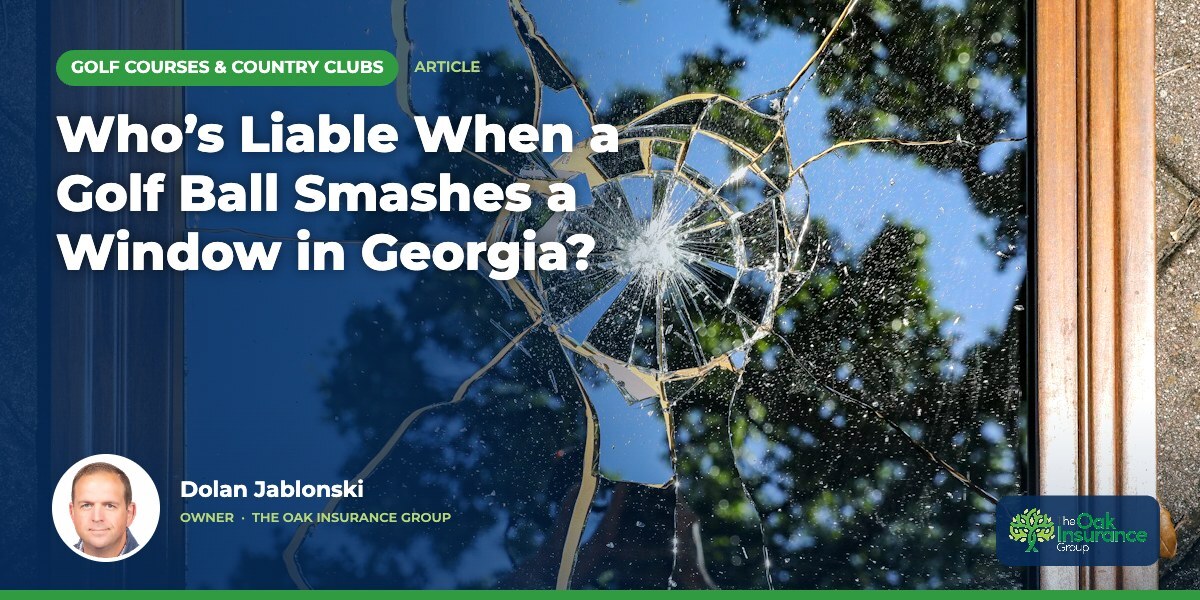
Have you ever wondered who’s responsible when a golf ball flies off-course and crashes into someone’s window?
If you own or manage a golf course in Georgia, could that simple mistake turn into a costly lawsuit?
In this comprehensive guide, you’ll learn how Georgia law handles errant golf balls, who’s liable when damage occurs, and the legal protections available to golf course owners.
We’ll break down:
- Georgia’s key legal doctrines, including assumption of risk and easements
- Real case law, like the pivotal DeSarno decision
- Practical risk management strategies to protect your course
- How to draft a rock-solid golf ball easement
- Insurance and homeowner relations tips to reduce legal exposure
Georgia’s Legal Landscape: What Governs Errant Golf Ball Liability?
Golf courses in Georgia face unique liability risks due to errant golf balls. Fortunately, two legal doctrines offer substantial protection when properly understood and applied.
Assumption of Risk: A Legal Shield for Course Owners
Under Georgia law, the doctrine of assumption of risk means homeowners who knowingly move next to a golf course accept the inherent risk of stray golf balls. In other words, if you choose to live near fairways and greens, you can’t claim complete surprise when one breaks your window.
A 2025 report by Atlanta News First emphasized that Georgia courts uphold this principle—placing significant legal responsibility on the homeowner, not the golf course.
Easements: The Best Legal Defense Against Lawsuits
Your strongest legal asset? A well-drafted, express easement. It gives your golf course the legal right for errant balls to enter neighboring properties.
In DeSarno v. Jam Golf Management, LLC (2008), the Georgia Court of Appeals upheld an easement clause allowing golf balls to “unintentionally come upon the Lot.” Despite 23 broken windows and numerous other damages, the golf course was not held liable because of the recorded easement.
Key takeaway: Without an easement, repeated ball damage can lead to successful nuisance or trespass claims. With one, you have a legal firewall.
Golfer vs. Golf Course: Who Actually Pays?
Even if your course is protected, the individual golfer may still be held responsible for damages they cause. The easement in the DeSarno case explicitly stated it did not relieve golfers of personal liability.
The National Golf Course Owners Association (NGCOA) reinforces this view: if a golfer’s shot causes damage—especially with reckless intent—they can be sued directly.
Risk Management: How to Prevent Legal Trouble
Strategic Course Design
A well-designed course can prevent lawsuits before they happen. Consider:
- Tee box adjustments to redirect shots
- Tree lines or vegetation buffers to stop stray balls
- Protective netting or fencing in high-risk areas
Consult a golf course architect before making changes to avoid unintentionally increasing liability.
Buffer Zones: An Unwritten Rule Worth Following
There are no official buffer zone standards in recreational golf—but don’t ignore them. Research from 1,561 golf negligence lawsuits shows nearly 50% of cases resulted in liability when no clear buffer was present.
Even if the law doesn’t require buffer zones, they show due diligence—and that can be powerful in court.
Smart Risk Mitigation Strategies
| Strategy | Description |
|---|---|
| Strategic Course Design | Layout changes to redirect balls away from homes |
| Clear Signage | Warning signs to alert golfers to risk zones |
| Protective Netting | Barriers to stop errant balls in vulnerable areas |
| Open Communication | Building trust and transparency with nearby homeowners |
Document Everything: A Legal Safety Net
If you ever face litigation, detailed records could save you. Keep documentation of:
- Course assessments
- Modifications made
- Communication with homeowners
- Legal reviews of easements
This shows a proactive approach to safety and risk management—essential in court.
How to Draft a Legally Sound Golf Ball Easement
A generic easement isn’t enough. To protect your course, your easement should include:
- Clear scope of affected properties
- Permission for unintentional ball entry
- Clarification that it protects the course owner—but not the golfer
- Language allowing reasonable ball retrieval
Sample Clause (Based on DeSarno Case)
“Every Lot… is burdened with an easement permitting golf balls unintentionally to come upon the Lots… and for golfers at reasonable time and in a reasonable manner to come… to retrieve errant golf balls. However, if any Lot is fenced… the golfer will seek the Owner’s permission before entry. This easement shall not relieve golfers of liability… nor shall the Association be held liable for any damage or injury.”
Insurance & Complaint Resolution: Don’t Skip These Steps
Even the best-prepared course faces occasional incidents. Make sure you have:
- Liability insurance that covers errant golf balls
- Coverage for both property damage and personal injury
And never ignore homeowner complaints. The NGCOA urges early communication and reasonable accommodations to prevent lawsuits before they start.
Conclusion: How to Protect Your Course and Community
At the end of the day, errant golf balls are inevitable—but lawsuits don’t have to be. If you’ve faced broken windows, homeowner complaints, or even legal threats, it’s time to take action.
By understanding Georgia’s legal doctrines, securing airtight easements, designing risk-aware courses, and communicating with nearby residents, you can shield your golf course from financial and legal pitfalls.
Now that you know how to protect your course from errant ball liability, your next step is to get a professional policy review.
We’ll help you evaluate your current insurance coverage, assess any legal exposure, and make sure your golf course is protected from all angles.
→ Ready to safeguard your course
Keep Reading
- Golf Course & Country Club Insurance from The Oak Insurance Group
- Protecting Your Investment: A Georgia Golf Course Owner’s Guide to Maintenance Equipment Insurance
- Alpharetta Golf Course Insurance: Hidden Risks and Solutions

Frequently asked questions
What is an easement for golf balls?
A well-drafted, recorded easement gives a golf course the legal right for errant balls to enter neighboring properties. Without one, repeated ball damage can support nuisance or trespass claims, and with one the course has a strong legal defense. Have an attorney review how it is written.
Can a golfer be sued personally for breaking a window?
Yes. Even when a course is protected, the individual golfer may still be held responsible for damage they cause, particularly with reckless intent. The easement in the leading Georgia case explicitly did not relieve golfers of personal liability.
What is the assumption of risk doctrine for golf courses in Georgia?
Under the doctrine, homeowners who knowingly move next to a golf course accept the inherent risk of stray golf balls. In other words, if you choose to live near fairways, you cannot claim complete surprise when a ball breaks a window. This places significant responsibility on the homeowner.
What should a golf ball easement include?
A generic easement is not enough. It should clearly define the affected properties, permit unintentional ball entry, clarify that it protects the course owner but not the golfer, and allow reasonable ball retrieval. Having an attorney draft or review the language is a sensible step.
How can a golf course reduce errant ball lawsuits?
We suggest course design changes like tee box adjustments, tree lines, and netting, plus buffer zones as evidence of due diligence. We also recommend documenting assessments, modifications, homeowner communication, and easement reviews, keeping liability insurance that covers errant balls, and addressing homeowner complaints early.
Topics: