Quick answer
Georgia tech manufacturers often have gaps in cyber, intellectual property, supply chain business interruption, smart equipment, and software-related product liability coverage. Legacy policies may not respond to operational technology downtime, supplier disruptions, or non-physical damage. Compare your policies against these five areas and review them with an agent.
This article highlights five critical insurance gaps that Georgia’s technology manufacturers commonly face, including insufficient cyber coverage and lack of intellectual property protection. It explains how these gaps can lead to significant financial losses and offers practical advice to identify and address these vulnerabilities to safeguard business operations.
Key Takeaways:
- Cyber insurance policies should cover operational technology (OT) downtime and business interruption, not just data breaches, to fully protect manufacturing systems.
- Intellectual property, such as designs and trade secrets, often lacks adequate insurance coverage despite being a manufacturer’s most valuable asset.
- Legacy insurance policies may not address risks from integrated systems, remote suppliers, or cloud-based manufacturing environments, creating costly blind spots.
- Regularly assessing your insurance coverage against evolving technology risks helps prevent unexpected financial losses from gaps in protection.
5 Critical Coverages You Might Be Missing

One Missed Clause Could Cost You Millions
Would your insurance actually protect you if your robotics software caused a product failure—or if a ransomware attack brought your production line to a standstill? Have you ever dug into whether your policy covers your most valuable asset: your intellectual property?
If you’re not sure, you’re not alone—and that uncertainty could be costing you more than you think.
In this article, we’re breaking down the five most critical insurance gaps threatening Georgia’s tech manufacturing sector right now—along with what you can do to address each one. You’ll walk away knowing exactly where your vulnerabilities lie and how to secure the protection your business needs to thrive in today’s complex risk environment.
Georgia’s Tech Sector Is Booming—But So Are the Risks
With over 450 tech manufacturers now operating across the state and annual growth exceeding 4%, Georgia has quickly become a national hub for electronic components, precision manufacturing, and smart technology development. But with innovation comes complexity—and too often, insurance coverage doesn’t evolve at the same pace.
Legacy policies weren’t built for integrated systems, remote supplier dependencies, or the realities of a cloud-driven manufacturing environment. The result? More companies are discovering major insurance blind spots—after a loss has already happened.
Download the Tech Manufacturing Insurance Gap Assessment Checklist (PDF)
1. Cyber Insurance That Doesn’t Cover Operations
Most cyber policies were built for data breaches. But what if your operational technology (OT) is hacked and held hostage?
One Georgia firm learned the hard way: a ransomware attack encrypted their manufacturing systems. Their cyber policy covered the ransom—but not the $1.2 million in business interruption costs that followed. Why? The systems weren’t labeled as “IT.”
Today’s ransomware trends in manufacturing demand more comprehensive protection—covering not just stolen data, but also OT downtime and production loss.
Look for coverage that includes:
- OT and IoT system failures
- Business interruption without a breach
- Intellectual property theft
- Supply chain cyber vulnerabilities
2. No Protection for Your Intellectual Property
If your designs, code, or trade secrets were stolen tomorrow—how would you recover?
For most manufacturers, intellectual property is the core value of the business. Yet standard insurance programs often exclude IP loss altogether.
In Georgia, where IP litigation trends have spiked over the past five years, the absence of protection could be devastating.
Common gaps include:
- No defense for infringement claims
- No trade secret coverage
- No enforcement cost reimbursement
- No protection for process methodologies
Suggested Visual: Table comparing types of IP vs. what’s typically covered
3. Business Interruption That Ignores Your Supply Chain
If your factory floods, your BI policy kicks in. But what if your overseas supplier gets hit with a regulatory shutdown? For most policies, no physical damage = no payout.
During the 2023 chip shortage, Georgia tech manufacturers reported average losses of $157,000 per week. Many BI claims were denied—because the disruption didn’t happen on their premises.
You might be unprotected if:
- Suppliers are international
- The delay wasn’t caused by property damage
- Regulatory shutdowns halted production
- Tech platforms or cloud vendors caused delays
Learn more about contingent business interruption coverage, and how to ensure your policy includes coverage for supply chain risks like the chip shortage.
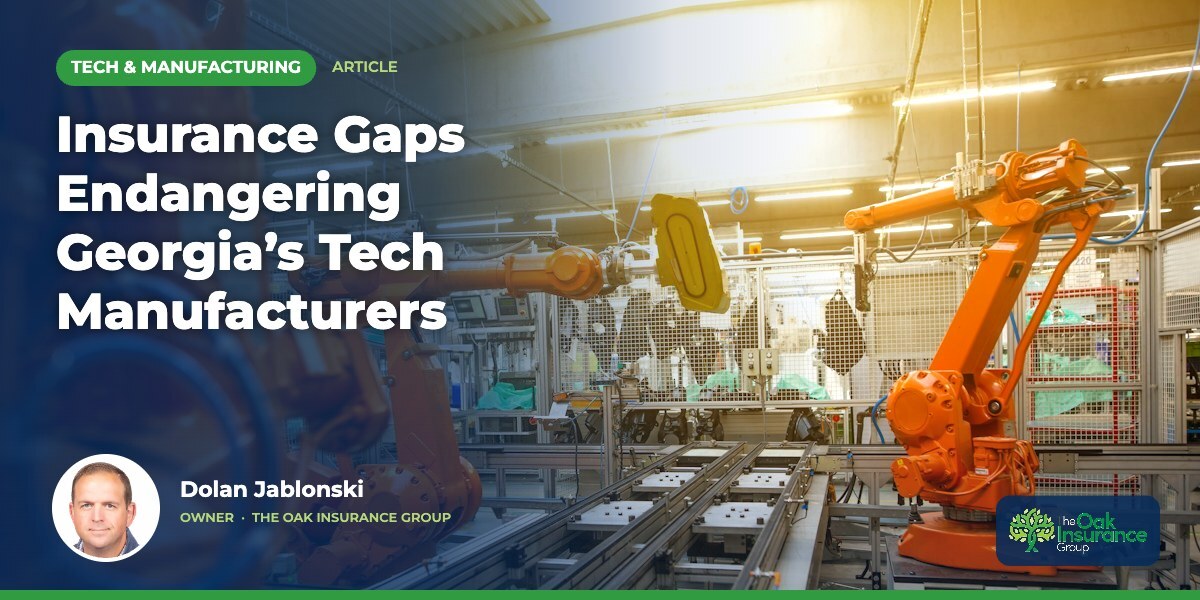
4. Outdated Equipment Insurance That Misses Smart Tech
Smart manufacturing runs on robotics, proprietary software, and calibrated systems—not just gears and motors. But standard equipment breakdown policies haven’t kept up.
If your robotic arm fails because of a firmware update, or if a calibration tool goes offline, chances are your current coverage won’t help.
In Georgia, a single day of downtime can cost $38,000. And smart equipment repairs are over three times more expensive than traditional ones.
What to add:
- Coverage for digital and hybrid systems
- Firmware and performance degradation protection
- Commissioning and calibration safeguards
5. Product Liability That Excludes Software Issues
With the rise of IoT and embedded software, liability risks are shifting. But most standard policies only respond when physical damage occurs. That’s a problem when claims are triggered by things like a faulty sync, corrupted data, or exploited vulnerability.
Non-physical damages in tech insurance are a rising concern, and so are embedded software liability claims.
What’s often missing:
- Liability for non-physical damages
- Coverage for patches and software updates
- IP theft via product vulnerability
- Protection against data corruption
Conclusion: Don’t Wait to Discover the Gaps After a Loss
Georgia’s technology manufacturers are innovating at warp speed—but far too many are relying on outdated insurance structures that weren’t built for modern risk.
The gaps we’ve outlined—cyber liability, IP protection, supply chain disruption, smart equipment coverage, and software-driven product liability—are no longer fringe concerns. They’re central to the operational and financial health of your business.
Your Next Steps:
Schedule a complimentary policy review with Oak Insurance Group
Explore more insurance strategies for manufacturers to make sure you’re protected now—and ready for what’s next.
Keep Reading
- Commercial Insurance from The Oak Insurance Group
- Insurance Gaps for Tech Manufacturers in Georgia: What Property Misses
- Premises Liability for Homeowners Near Augusta National: What You Need to Know

Frequently asked questions
Does cyber insurance cover manufacturing downtime?
Not always. Most cyber policies were built for data breaches and may not cover operational technology downtime. One Georgia firm's policy covered a ransom but not $1.2 million in business interruption because the systems were not labeled IT. Look for coverage that includes OT failures and business interruption.
Does standard insurance cover stolen trade secrets or designs?
Standard insurance programs often exclude intellectual property loss altogether. Common gaps include no defense for infringement claims, no trade secret coverage, no enforcement cost reimbursement, and no protection for process methodologies. Ask an agent what, if anything, your current policies do for intellectual property.
What is contingent business interruption coverage?
Standard business interruption often requires physical damage at your own premises. A supplier shutdown elsewhere may mean no payout, and many claims during the 2023 chip shortage were denied for this reason. Contingent business interruption coverage is the type designed for supply chain disruptions.
Does equipment breakdown insurance cover robots and smart machinery?
Standard equipment breakdown policies may not keep up with smart manufacturing. A robotic arm failing after a firmware update or an offline calibration tool may not be covered. We suggest asking about coverage for digital and hybrid systems, firmware and performance degradation, and commissioning and calibration.
Does product liability insurance cover software problems?
Most standard policies only respond when physical damage occurs. Claims triggered by a faulty sync, corrupted data, or an exploited vulnerability may fall outside coverage. Commonly missing items include liability for non-physical damages, patches and updates, and data corruption, so review your wording with an agent.
Topics: