Quick answer
Georgia golf courses need professional services insurance because caddies give advice that can lead to negligence claims that general liability does not cover. Courses should also classify caddies correctly. Treating them as independent contractors when the course controls their work can trigger IRS penalties, wage violations, and lawsuits, so confirm your classification and coverage with an insurance advisor.
This article explains why professional services insurance is crucial for Georgia golf course owners to protect against legal and financial risks related to caddie classification. It highlights the importance of correctly classifying caddies as employees rather than independent contractors and outlines Georgia’s insurance requirements to maintain compliance and safeguard golf courses. The piece also honors Augusta’s caddie legacy, emphasizing their professional role and the need for comprehensive risk management strategies.
Key Takeaways:
- Misclassifying caddies as independent contractors instead of employees can lead to costly IRS penalties, wage violations, and lawsuits.
- Georgia golf course owners must understand and comply with state insurance laws to properly protect their business and staff.
- Professional services insurance covers liabilities specific to caddie-related services, helping courses manage risks tied to employee roles and responsibilities.
- Building a thorough risk management strategy ensures compliance, protects the course financially, and honors the professional standards set by Augusta’s caddie tradition.

Are you sure your golf course is fully protected from legal and financial hazards?
Could one misstep in how you classify or insure your caddies cost you tens of thousands of dollars, or worse, your business?
In this article, you’ll learn why professional services insurance is essential for Georgia golf course owners, especially in the context of honoring the storied legacy of Augusta’s caddie culture. We’ll cover the risks tied to misclassifying caddies, Georgia’s insurance requirements, and how to build a bulletproof risk management strategy that keeps your course compliant, competitive, and protected.
Table of Contents:
- The Legacy of Augusta’s Caddies: Skill, Strategy, and Service
- The Caddie Classification Conundrum
- Georgia’s Must-Know Insurance Laws for Course Owners
- What Professional Services Insurance Actually Covers
- How to Build a Total Risk Management Strategy
The Legacy of Augusta’s Caddies: Skill, Strategy, and Service
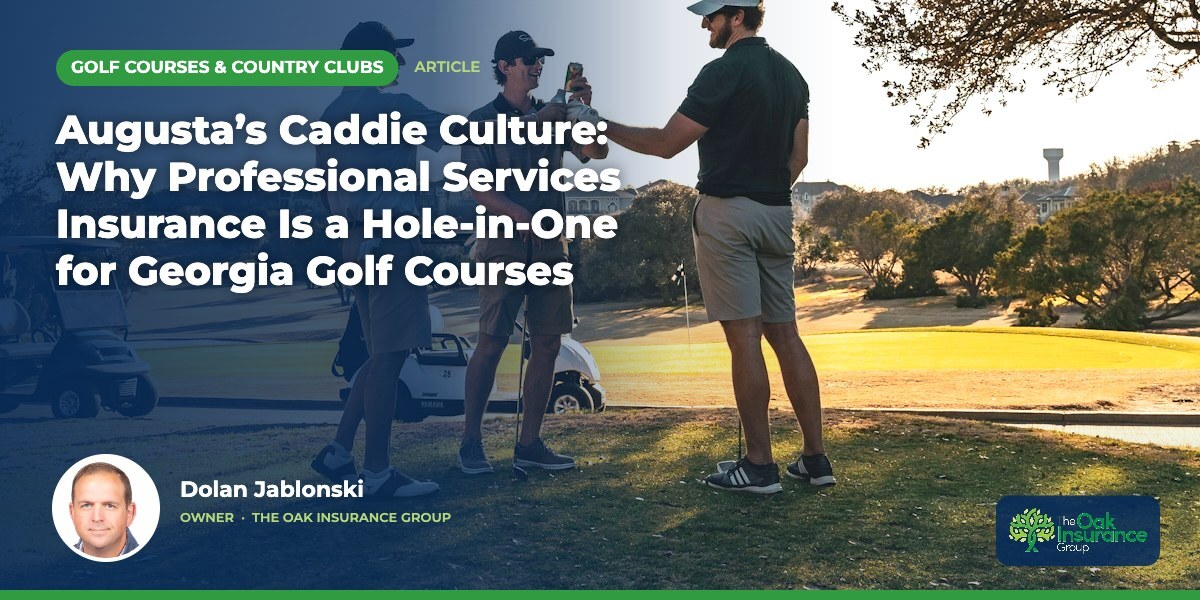
The story of Augusta’s caddies is more than folklore. It’s a masterclass in professionalism. For nearly 50 years, the Masters Tournament required players to use Augusta National’s own caddies, all of whom were Black men from the local community. These caddies weren’t just carrying bags. They were offering elite-level strategic insights that shaped championship outcomes.
Legends like Willie “Pappy” Stokes and Carl Jackson didn’t just walk the course. They knew it better than anyone alive. Jackson caddied in 54 Masters tournaments. Their influence proved that caddies are not casual laborers. They are expert service providers critical to the success of the sport.
That legacy continues today. Whether it’s advising on club selection, reading greens, or navigating course conditions, modern caddies are professionals in every sense. And professional services come with professional liabilities.
The Caddie Classification Conundrum
Here’s where many golf course owners unknowingly step into a legal sand trap: classifying caddies as independent contractors when, by all legal definitions, they should be employees.
Why does this matter? If you control their schedules, assign them to golfers, train them, and oversee their behavior on the course, you’re not just guiding them. You’re employing them.
Misclassification can trigger serious consequences:
- IRS back taxes and penalties
- Department of Labor wage and hour violations
- Class-action lawsuits for unpaid overtime and benefits
In fact, there have been high-profile cases where caddies successfully won claims for back pay, with six-figure payouts not uncommon. If you’re treating caddies like part of your team, the law likely sees them that way too. And so should your insurance.
Georgia’s Must-Know Insurance Laws for Course Owners
Georgia law is clear. If you have three or more employees, you are legally required to carry workers’ compensation insurance. This applies to full-time, part-time, and even seasonal staff.
If your caddies qualify as employees, they must be covered.
Workers’ comp protects both your business and your people. It covers:
- Medical costs
- Lost wages
- Rehabilitation for job-related injuries
And it doesn’t stop there. Georgia’s premises liability laws mean you are also responsible for providing a safe environment for members, guests, and employees. One injury could result in a lawsuit that puts your entire business at risk.
What Professional Services Insurance Actually Covers
Professional liability insurance, also known as Errors and Omissions (E&O), is what general liability insurance doesn’t cover. It protects against claims of negligence tied specifically to the services you and your staff provide.
For Georgia golf courses, this includes:
- Caddie Negligence: A caddie gives faulty advice, causing injury or damage
- Instructor Liability: A swing tip results in a torn rotator cuff
- Course Design Oversights: A poorly maintained green leads to an accident
- Tournament Blunders: An administrative error causes financial loss to participants
Other essential coverages to include:
| Insurance Type | Coverage | Why It Matters |
|---|---|---|
| Professional Liability | Negligence and errors in services | Critical for caddie advice, golf instruction, and course management |
| General Liability | Bodily injury and property damage | Protects against day-to-day accidents on the course |
| Workers’ Compensation | Medical expenses and wage replacement | Legally required if caddies are employees |
| EPLI | Employment-related claims like misclassification or harassment | Protects against lawsuits tied to how you manage your staff |
How to Build a Total Risk Management Strategy
To protect your course, your staff, and your legacy, you need more than a single policy. You need a full-spectrum risk strategy.
- Classify Your Workers Correctly
Work with legal and insurance experts to avoid missteps with the IRS and DOL. - Secure Specialized Insurance Coverage
Choose an insurance provider who understands the golf industry’s specific risks. - Create and Enforce Safety Protocols
Document procedures for equipment use, cart safety, lightning policies, and more. - Train Your Staff Thoroughly
Make sure everyone understands their responsibilities and how to handle emergencies.
Don’t Let a Legal Mulligan Cost You the Game
The legacy of Augusta’s caddies teaches us that professionalism in golf runs deeper than the scoreboard. It’s about excellence, trust, and preparation. If you’re a Georgia golf course owner, honoring that tradition means more than tip-of-the-cap respect. It means legal compliance, comprehensive protection, and fair treatment of your team.
Misclassification isn’t just a paperwork issue. It’s a risk that could sink your business if ignored. But with the right insurance portfolio and a solid risk management strategy, you can keep your course thriving and your legacy protected.
Your next step: Talk to an insurance advisor who specializes in golf operations and get clarity on whether your current policies truly protect your staff and your bottom line.
Keep Reading
- Golf Course & Country Club Insurance from The Oak Insurance Group
- Complete Guide to Hole-in-One Insurance for Georgia Golf Tournaments
- Comprehensive Georgia Resort Insurance: Golf Course to Marina

Frequently asked questions
Should a golf course classify caddies as employees or independent contractors?
If a course controls caddies' schedules, assigns them to golfers, trains them, and oversees their behavior, the law likely sees them as employees. Misclassifying them can bring IRS back taxes, wage and hour violations, and class-action claims. Get guidance from legal and insurance experts before deciding.
What does professional liability insurance cover for a golf course?
Professional liability, also called errors and omissions, covers negligence claims tied to the services a course and its staff provide, which general liability does not. Examples include faulty advice from a caddie, a swing tip from an instructor that causes injury, a poorly maintained green, and tournament administrative errors.
When does a Georgia golf course have to carry workers' compensation?
Georgia law requires workers' compensation once a business has three or more employees, including full-time, part-time, and seasonal staff. If caddies qualify as employees, they must be covered. Workers' comp pays medical costs, lost wages, and rehabilitation for job-related injuries.
What happens if a golf course misclassifies caddies?
Misclassification can lead to IRS back taxes and penalties, Department of Labor wage and hour violations, and class-action lawsuits over unpaid overtime and benefits. Caddies have won back-pay claims in high-profile cases, and six-figure payouts are not uncommon, so correct classification matters.
What should a golf course include in a risk management strategy?
We recommend four steps: classify workers correctly with legal and insurance help, secure specialized coverage from a provider who understands golf, create and enforce safety protocols such as equipment use, cart safety, and lightning policies, and train staff thoroughly on responsibilities and emergencies.
Topics: